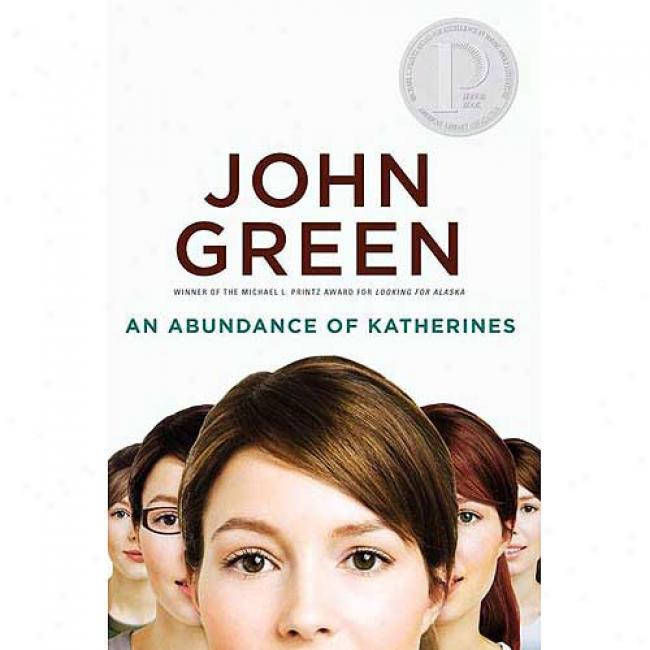
Goodreads

Maddie's books

Thirteen Reasons Why
4 of 5 stars
It was a good read because I haven't read anything like it before. The story line was original and it was very interesting. It was very sad, but still enjoyable.

goodreads.com

Wednesday, December 17, 2014

The Development of Peter Houghton as a Villain (Book 4 Review)


Stage 1: Injustice
Peter was bullied from the moment he stepped on the bus for his very first day of Kindergarten and from then on it only got worse. Bullies threw his Superman lunch box out of the bus windows, broke his glasses, punched him, called him names, sent out his private emails to the whole school, and even pulled down his pants in front of the whole cafeteria.  You can see only a glimpse of the torture Peter faced when Jodi says “ and in one smooth stroke he hooked his thumbs into the loops of Peter’s pants and yanked them down to his ankles”(Picoult 321).  All of these injustices done to him caused him to want to fight back and get revenge on his bullies.  Peter says “I guess I should tell you, don’t blame yourself; this isn’t your fault, but that would be a lie.  We both know that I didn’t get here by myself” (Picoult 1).  Nobody wants to admit this, “but bad things will keep on happening.  Maybe that’s because it’s all a chain, and a long time ago someone did the first bad thing, and that led someone else to do another bad thing, and so on” (Picoult 43).  The first bad thing someone did to Peter was throw his lunch box out the window which led someone else to make fun of him until the torture became endless and led him to do something unforgettable.  When at his trial Peter was asked why he did it and he answered “They started it….The bullies.  The jocks.  The ones who called me a freak my whole life” (Picoult 424).

Stage 2: Obsession
Peter was provoked by bullies so his obsession was to get revenge on those bullies and he did.  He went to extreme methods to get revenge.  He made car bombs, loaded up on weapons, targeted his victims by circling faces in the Sterling Middle School yearbook, and then brought his weapons to school where his revenge was served.  His revenge was walking over the dead bodies that he shot and seeing the life drain out of their face.  Jodi says “In nineteen minutes, you can order a pizza and get it delivered.  You can walk a mile.  You can sew a hem.  In nineteen minutes, you can stop the world, or you can just jump off it.  In nineteen minutes, you can get revenge” (Picoult 1).
 
Stage 3:  Pride
Peter was blinded by his plan to get revenge that he didn’t realize how catastrophic it would be.  He thought he was doing the right thing for himself because he was in a dissociative state since he struggled from post-traumatic stress disorder.  No one was there to protect him or help him from the bullies which is why he felt so strongly in what he did since not a single person reached out to him.

Stage 4: Isolation
Lacy Houghton, Peter’s mom, said that Peter was always locked away in his room and always doing something on the computer when she walked in.  He resorted to the digital world since no one was paying attention to him in real life.  He created a computer game called “Hide-N-Shriek” where the nerds in school got to kill the bullies.  He realized how easy it was to win in a computer game and thought he could do the same in real life.  Peter says “when I did it in the game, I won” (Picoult 425).

Stages 5&6: Detachment and Cruelty/Wickedness
The biggest scene in the book where I realized how Peter had no remorse for what he had done or felt was when “he passed by the boy he’d shot who lay in a puddle of blood….and then he sat down at one untouched tray and placed the gun on it.  He opened a box of Rice Krispies and poured them into a Styrofoam bowl.  He added the contents of a milk container and ate all the cereal before standing up again, retrieving his pistol, and exiting the cafeteria” (Picoult 126).  That moment is so chilling because Peter obviously isn’t concerned about the disaster he just created.   Instead, he is rather calm and goes about life no differently than before he killed 10 people.


Peter had a rough and disappointing start to life.  He suffered the torture of being picked on everyday of his life which is why he resorted to such extreme methods to end it all.  His lack of remorse for what he did and his obsession with revenge is what makes him a Villain to all whose lives were changed drastically by him.

Post #10: Reading Wishlist

I just finished reading the novel Nineteen Minutes by Jodi Picoult and it was definitely my favorite book this semester.  It was almost 500 pages, but I found it easier to finish than the other books I read simply because I enjoyed it.  I think Jodi Picoult did an excellent job writing it so the next book I will read over break will be My Sister's Keeper because that is another one of her highly praised books. All the other books I wish to read by the time I leave for college are listed below as well.  I'm glad I got the chance to pick back up on reading for fun and I hope to continue it throughout the rest of my life.


Monday, December 15, 2014

Reading Wishlist/Goodreads link

Maddie's books

Thirteen Reasons Why
4 of 5 stars
It was a good read because I haven't read anything like it before. The story line was original and it was very interesting. It was very sad, but still enjoyable.

goodreads.com

Book 2 Trailer

Book Talk Presentation

Monday, November 24, 2014

Five Reasons why Amy Elliott Dunne is a Sociopath

WARNING: Major Gone Girl Spoilers Including the Ending

Anyone who read the book Gone Girl by Gillian Flynn will have sympathy for Amy within the first 200 pages.  Her diary entries and the clues left around her house make it seem like her husband, Nick Dunne, murdered her.  The public begins to detest Nick and the police force begins to turn on him too.  However, Nick knows he is innocent and the readers begin to believe him once they see the real, devilish side of Amy.  Amy Elliot Dunne is a sociopath and these shocking reasons will prove it.

1.  Amy Elliot Dunne framed her husband, Nick Dunne, for her murder.  This was the major plot twist in the book.  She did everything right to try to convince the world that he had killed her.  Here are some of the items on her checklist:

 "Item 18: Stage the living room.  Tip ottoman.  Check” (220).
“Item 22:  Cut myself “(219).
“Item 33: Get out of dodge” (220).
“Item 34: Change look. Check” (236).
 Amy framed Nick because Nick got lazy and fell out of love with her and in love with a young woman named Andie.  Most normal people would file for a divorce and let it go, but Amy couldn’t do that because she would be giving Nick what he wanted…so she framed him for murder.  That’s some pretty messed up revenge, huh?  Amy says, “So I may have gone a bit mad.  I do know that framing your husband for murder is beyond the pale of what an average woman might do.  But it’s so very necessary.  Nick must be taught a lesson” (Flynn 234).

2.  Amy created fake diary entries from 2005 to 2012 where she wrote horrible and false things about Nick to make it seem like he had something to do with her disappearance.  Amy said “One hundred and fifty-two entries total, and I don’t think I ever lose her voice.  I wrote her very carefully, Diary Amy.  She is designed to appeal to the cops, to appeal to the public should portions be released.  They have to read this diary like it’s some sort of Gothic Tragedy” (Flynn 238).


3.  Amy faked a pregnancy to get more sympathy from the public.  Amy started a fake friendship with the already pregnant, Noelle Hawthorne, so that Noelle could become attached with Amy and reveal Amy’s pregnancy once she disappears.  The pregnancy made her disappearance look like Nick killed her because he didn't want a baby.  This is where things get really weird.  Amy started this crazy idea with steps such as “A search online: how to drain your toilet for repair.  Noelle invited for lemonade.  Lots of lemonade.  Noelle peeing in my drained, unflushable toilet, each of us so terribly embarrassed!  Me, a small glass jar, the pee in my toilet going into the glass jar.  Me, the glass jar of pee hidden in my purse, a doctor’s appointment (oh, I can’t do a blood test, I have a total phobia of needles…urine test, that’ll do fine, thank you).  Me, a pregnancy on my medical record.  Me, running to Noelle with the good news” (Flynn 259).


 4.  Amy wants to return home to Nick because of the interviews she has seen of him on T.V.  She actually believes that he loves her again and that he is sorry for neglecting her.  Amy comes up with a disturbing plan that will prove that her husband is innocent and that she is innocent as well so that she can return home.  She has to make sure that no one knew she was framing her husband because she could get in heaps of trouble for that.  She plans to frame Desi, the man that came to her rescue when she was in desperate need of help after she ran away and hid from the mess she started.  She returns home beaten up and bruised, claiming that Desi kidnapped her and raped her.  When Nick asks Amy how she set Desi up she responds “I found some twine in one corner of his basement.  I used a steak knife to saw it into four pieces.  Whenever Desi wasn’t around, I’d tie the pieces as tight as I could around my wrists and ankles so they’d leave these grooves” (Flynn 388).  She did these acts of discipline so it would look like qualities of a rape victim.  It was definitely insane, but her conniving plan worked.  The police believed her and Desi died a guilty man.  Amy killed him to make it look like an act of self-defense and so that she could return home and tell her story of lies with no one to fight it.

5.  Amy is a sociopath just in the fact that she pulled this whole act off.  She left no trace of evidence in what she had done.  Nick says “She fool proofed everything.  It’s ludicrous, her story, but no more ludicrous than our story.  Amy’s basically exploiting the sociopath’s most reliable maxim…The bigger the lie, the more they believe it” (Flynn 390).  Amy had been planning these insane events for a year and they were so over the top and constantly on her mind that she committed to the role and started to believe her husband was the bad guy, not her. 

How to spot a Sociopath according to Psychology Today:

*     Superficial charm and intelligence
*     Absence of delusions and other signs of irrational thinking
*     Absence of nervousness or neurotic manifestations
*     Untruthfulness and insincerity
*     Lack of remorse and shame
*     Specific Loss of insight

Amy follows the above descriptions without hesitation which is why she is a sociopath.  Her conniving mind and horrific actions make up the whole plot line of the book which is why her sociopath tendencies are allowed and accepted in this novel—crazy people and their actions make for a thrilling novel.


Thursday, November 20, 2014

Blog Post #5


I think a book has to be partially true to be considered non-fiction.  As long as the book that the author considers “non-fiction” is a good read, I would say it’s acceptable to have a few false details in there.  There is no way to tell if the author is making the story up or not, so you might as well just enjoy it.  When I try to recall certain small facts like “What did I wear on Tuesday?” I have a hard time remembering so I’m sure writers can’t remember those tiny details to include in their story.  I’m ok with writers changing the facts a little if it doesn't upset anyone.  Writers have to embellish the story a little to make it more interesting to read otherwise it’s just a bunch of facts being listed and most people don’t like reading history text books for fun.  However, I do think it is immoral when an author writes a non-fiction book about serious events such as the holocaust or 9/11 and lies about it because it’s wrong to lie about events that hurt so many people and the people actually know the truth of the matter so they can tell what the author lied about.  I think we do need lines between genres so we know what is true and what is made up, but there’s no way to do that because authors can completely make up a story and say it’s true and there is really no way to prove them wrong.  Most people don’t have the time to research authors and find all the facts to show that they made up every aspect of a book they wrote.  As long as a book that is claimed to be non-fiction is a fascinating story and doesn’t disrespect tragic events, than its ok to add extra detail in the book that isn't true. 

Thursday, October 9, 2014

Blog Post #4


One essential scene that should be kept while adapting *It's Kind of a Funny Story* by Ned Vizzini into a movie is the party scene at Aaron's house.  This scene is essential to the novel because it shows how alone Craig feels even while in groups of people and how this feeling of being alone is one of the reasons why Craig contemplates suicide.  Craig isn't having fun even though everyone else is so he thinks something is wrong with him.  This scene shows how teenagers should be acting and what most teenagers his age are doing, and since Craig doesn't follow what his friends do, he is contrasting these actions which makes him an outcast.
Another essential scene that should be kept while adapting this book into a movie is when Craig is accepted into Executive Pre-Professional High School.  This scene is important because it shows how his hard work was rewarded and how he was so excited to begin high school.  However, once he starts high school he finds out how hard all of his classes are and how he is on the bottom of the totem pole compared to the geniuses in his classes.  Craig realizes that his grades are awful compared to the other kids in his classes and realizes that he isn't involved in as many extracurricular activities as he should be so he begins to feel like a failure.  This feeling of not being good enough contributes to his suicidal thoughts and makes his depression worse which leads him to admit himself into a hospital.
Another scene that must be kept while adapting this book into a movie is the scene when Craig attends drawing class in the hospital.  This scene is important because Craig starts drawing maps again which is what he loved to do before life got too hard for him and he got depressed.  This scene shows that Craig is on the right track to being happy again and that he has hope for a better life since he is picking up old hobbies that he really enjoyed and meant something to him.
One scene that the filmmakers can afford to cut out is the scene when Craig walks into the lunchroom for the first time at the hospital and Jennifer/Charles flirts with him.  I don't think this scene is important because there are already enough characters that show how unique this hospital is, and they can afford to cut this character out since he is released the next day.  I didn't see his impact on the story.
Another scene that the filmmakers can afford to cut out is when Aaron calls Craig at the hospital for the second time.  Aaron is making fun of Craig for being in the "loony bin" and I don't think that was necessary.  Aaron doesn't understand that Craig has clinical depression and continues to pick fun of him.  The film won't suffer without this rude scene.

Tuesday, September 16, 2014

Book 1 Project: Fan Experience


Book 1 Project: Fan Experience

 To expand a fan’s ability to interact with Jay Asher’s novel 13 Reasons Why, Monet’s  Garden Café & Coffeehouse will be opening in late September so that the fans can go and see where Hannah spent the majority of her time as well as order her favorite drink, hot chocolate with tiny marshmallows floating on top.  You don’t have to be a coffee drinker to enter; you just have to be a friend to others.  Hannah said it best, “Neither of us were coffee drinkers, but it seemed like a nice place to chat” (Asher 58).

Out of all of the settings in this book, I chose to highlight Monet’s Café because it was Hannah’s safe place freshman year when she was new to Crestmont.  Hannah would meet with Jessica and Alex there and talk about their troubles and how school was so nerve-racking when you were the new kid.  On side A of tape 2 Hannah comes out and says that “Monet’s Garden was our safe haven (referring to Alex, Jessica, and her).  If one of us had a hard time fitting in or meeting people, we’d go to Monet’s.  Back in the garden, at the far table to the right” (Asher 62).  I wanted to focus on the happier parts of the novel since the whole story line was dark and depressing, so I chose to focus on Monet’s Café because I know Hannah was comfortable and happy there. Setting played a huge part in the novel because of the map that Hannah left behind for Clay to follow. There were more than thirteen settings throughout the novel, but Monet's Café was definitely one of the settings where happy memories were made.

 There are great descriptions of Monet’s Café in the book so I know exactly how the Café will look/where everything goes. There will even be special drinks to order named after Hannah and Clay.  There will also be a book shelf with scribble books where fans can write about why they love the novel and what they thought of Monet’s Café and if they think it turned out the way they pictured it.  The fans will also get to see what Jessica, Alex, and Hannah wrote in a scribble book that was mentioned in the novel. Clay found the scribble book that they wrote in and in red ink near the top of the September book they wrote “Everyone needs an Olly-Olly-oxen-free” (Asher 91).  It was signed with three sets of initials: “J.D. A.S. H.B. Jessica Davis.  Alex Standall.  Hannah Baker” (Asher 91).  Fans will get to see the infamous photo of Hannah and Courtney Crimsen that was in the year book as well as left behind in a scribble book at Monet’s.  There will be quotes from the novel in this scribble book as well. 

There will be cassettes at each table and fans can rotate around from table to table to hear the tapes that Hannah left behind.  They can try to experience what Clay and the others had to go through and bond with all of the other people at the Café so they don’t have to feel alone like Hannah did.

I think this idea will work because the book is all about setting and it would be nice for the fans of the book to actually be in a place where Hannah considered her safe haven, and now the fan cans can consider it their safe place too if they are going through a hard time.  All of the people that will go to Monet's have a similar interest in the novel so everyone can connect and make new friends.

Images and descriptions of the Café:


.
Here is the garden that is a few steps away from the patio of Monet's. "Around the garden, to keep the atmosphere relaxed, the lights are kept low" (Asher 73).
This is what the inside of the building will look like.  It has warm colors and fun decorations to make it a comfortable place for everyone to hang out at.
This is the patio behind the cafe. It has a few tables including Hannah's signature table. The patio also leads out to the garden.  
This table is modeled off of Hannah, Alex, and Jessica’s table.  It is “back in the garden, at the far table to the right” (Asher 62).  You can sit here and try to understand what those three were going through once the cafe opens.
There will be a pour-it-yourself bar just like mentioned in the novel. The image above is how it will be set up and what it will look like.
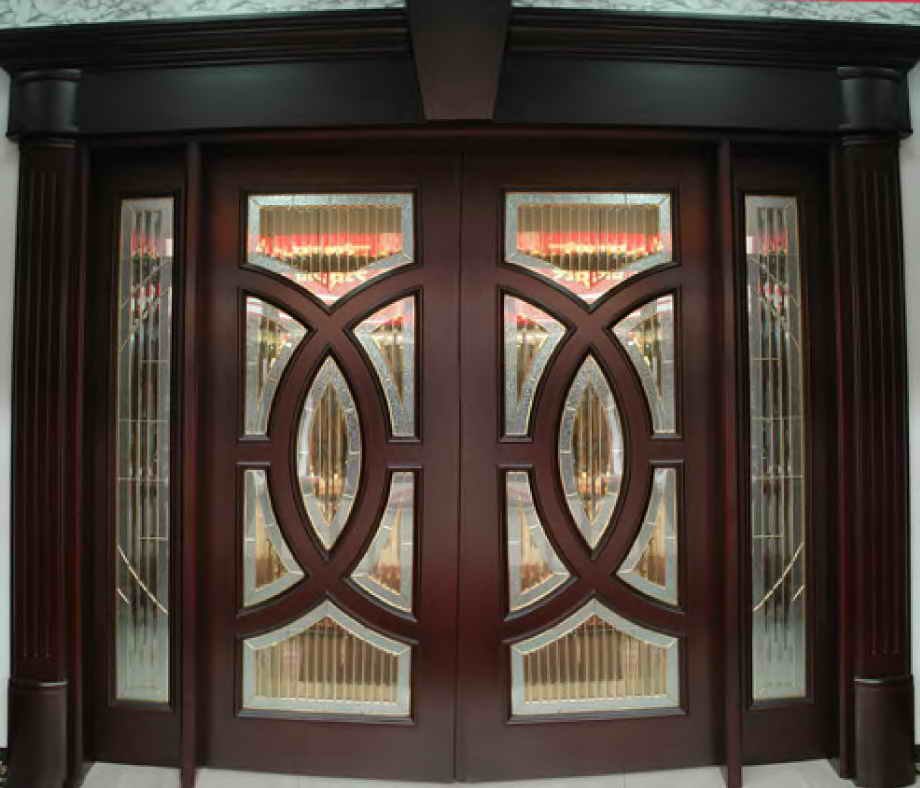
This “heavy wood-and-glass door” is the front entrance to the café.  There will be a grand opening sign on the door in a few days (Asher 68).


Wednesday, September 10, 2014

Post 2: What is a book?

I agree with Joe Meno when he said "A book is a place".  People read books so they can be transferred into a new world and experience new and exciting things.  When I read a book I feel as if I am in the place where the book is playing out.  It's good to throw yourself into a book and pretend as if you are a character because you will be more excited to read it and will understand the book in a better outlook.

I don't care whether I am reading on a kindle, iPad, phone, or reading from an actual book.  Like Joe Meno said, the "idea of the book is more important than the actual form it takes".  The message is more important than the form the book comes in.  People should start saying don't judge a book by its form because it’s not how the book comes that matters, it’s the content.

Now, if I had to choose whether to read an actual book or an eBook, I would still choose the original form because I get more into the story that way.  I feel more involved when I can flip the page instead of swiping a screen.  The only time when I purchased a book off of my phone is when I finished the first book in the Hunger Games Series and couldn't wait any longer to read the next book.  I wasn't patient enough to wait for my mom to run me to a bookstore so I downloaded it immediately since it was such a good book and I wanted to find out what would happen next.  However, I know society is becoming more warped into technology and eventually eBooks will be a bigger hit than a physical book.


It is sad to me that bookstores are going out of business because I did go frequently as a child and was usually allowed to pick out one book I really wanted almost every time I went.  It always excited me that I had that book all to myself and no one was allowed to go in my room and read it without my permission.  It’s sad and pathetic that my sisters and I fight over using the computer and borrowing each other’s cellphones instead of fighting over each other’s books on our bookshelves.  Another faint memory I have is that there were book fairs every month in elementary school and I always looked forward to that day.  My mom would always send me off with money and I would always find a book to spend it on.  It’s sad how old traditions are fading out, but I'm sure new ones will be made with eBooks.  As long as reading is still around in a few years I won't mind what I am reading off of.

Tuesday, August 19, 2014

Post #1: Why I Read

I read to escape from reality and to focus on something other than the problems that arise in today's society.  When I read a book I feel as if I am in that story and that the character's successes are my successes.  Whenever I read a love story I pretend as if I am the woman that has just been swept off of my feet by the man of my dreams.  I read so I can pretend that I have a  perfect life like the characters in my book.  It was nice to pretend that I was dating Augustus Waters when I read The Fault In Our Stars because of what a sweetheart he is in the book. I also read books for the sheer enjoyment of it.  Books such as the Harry Potter series excite me and leave me longing for answers as well as wishing that I could cast a spell and make all my homework disappear.  I read because it is relaxing, exciting, and comforting to know that people have crazy imaginations and big dreams just like me.